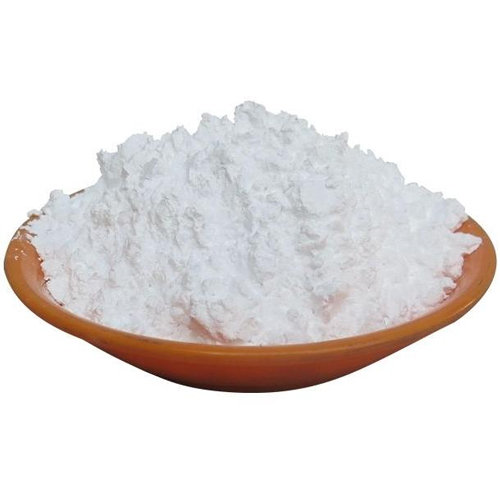
Tin(IV) Sulfide (SnS₂)
Layered N-Type Semiconductor | Mosaic Gold | Gas Sensing Material
MOQ: 100 Kilograms
Product Description
Tin(IV) Sulfide (SnS₂), commonly called stannic sulfide, is a layered hexagonal semiconductor with a distinctive gold-yellow appearance and n-type conductivity. This material crystallizes in the berndtite-2T structure (space group P-3m1), with strong S-Sn-S trilayers bonded by weak van der Waals forces between layers.
The wider 2.2-2.35 eV bandgap places SnS₂ in the visible light spectrum, providing unique optical characteristics exploited in decorative applications for centuries as mosaic gold. Modern applications leverage the material's gas sensing capabilities, photocatalytic activity, and two-dimensional material properties for advanced electronic and optical devices. The n-type conductivity from sulfur vacancy donors complements the p-type SnS for heterojunction device architectures, while the layered structure enables mechanical exfoliation for nanoelectronic applications.
Key Features
- Wide Bandgap: 2.2-2.35 eV enables blue-ultraviolet detection
- Distinctive Golden Color: Historically valued as mosaic gold pigment
- N-type Conductivity: Intrinsic electron conduction from sulfur vacancies
- Layered Structure: Enables two-dimensional material applications
- Gas Sensing Selectivity: Strong response to carbonyl groups (aldehydes, ketones)
- Thermal Stability: Stable to 300°C with optimal sensor operating temperature
Primary Applications
Gas Sensors
SnS₂-based conductometric sensors fabricated by screen-printing technology demonstrate strong selectivity to carbonyl groups in aldehydes and ketones. The optimal operating temperature of 300°C provides stable long-term signal response without the drift characteristic of metal oxide sensors. SnS₂ sensors offer advantages including absence of oxygen vacancy defects, excellent reproducibility, and response/recovery times comparable to established tin oxide sensors.
Decorative Coatings
The characteristic golden color known as mosaic gold or bronze powder has been used for centuries in gilding, bronzing, and decorative applications. The material's stability under light exposure makes it valuable for architectural coatings and automotive finishes requiring long-term color retention.
Optoelectronics
The wide bandgap enables blue-ultraviolet photodetection, light-emitting diodes, and optical switches not accessible to narrower-bandgap tin sulfide materials. Two-dimensional SnS₂ prepared by exfoliation enables field-effect transistors and nanoelectronic devices.
Photocatalysis
Visible-light absorption enables water splitting and organic pollutant degradation under solar illumination. The band positions and surface reactivity support photocatalytic reactions relevant to environmental remediation and hydrogen production.
Energy Storage
Lithium-ion and sodium-ion battery anodes utilize SnS₂'s high theoretical capacity from conversion reactions. The layered structure facilitates ion intercalation before conversion processes.
Handling and Safety
- Toxicity: Low toxicity, no lead content
- Storage: Tightly closed containers at room temperature
- Processing: Standard laboratory safety practices apply
- Operational Care: Maintain temperatures below 300°C for gas sensor applications