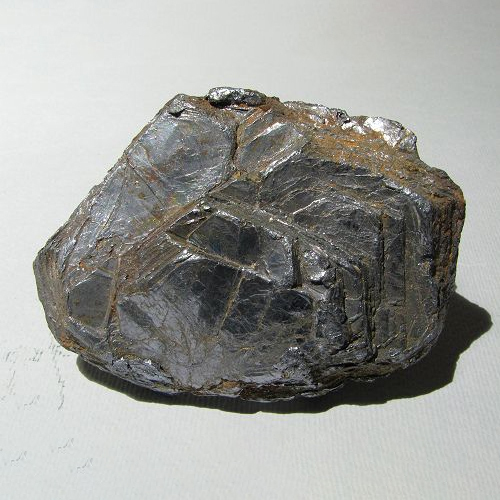
Tin(II) Sulfide (SnS)
Earth-Abundant P-Type Semiconductor for Sustainable Photovoltaics
MOQ: 100 Kilograms
Product Description
Tin(II) Sulfide (SnS), also known as stannous sulfide, represents one of the most promising earth-abundant semiconductor materials for sustainable photovoltaic and energy storage applications. This p-type semiconductor crystallizes in a layered orthorhombic structure (herzenbergite) and offers a direct bandgap of 1.2-1.5 eV that closely matches the theoretical optimum for solar energy conversion.
Unlike cadmium-based alternatives, SnS utilizes tin and sulfur—abundant elements with minimal environmental impact and reliable supply chains. The material's high optical absorption coefficient exceeds 10⁴ cm⁻¹, enabling complete light absorption in layers thinner than 1 micrometer. With over two decades of research investment, SnS has demonstrated power conversion efficiencies approaching commercial viability while offering a pathway to manufacturing processes with lower environmental footprint than established thin-film technologies.
Key Features
- Optimal Bandgap: 1.2-1.5 eV direct bandgap matches solar energy conversion optimum
- Intrinsic p-type Conductivity: No intentional doping required for solar cell applications
- Earth-Abundant Elements: Tin and sulfur are among the most abundant crustal elements
- Low Toxicity: Environmentally benign compared to cadmium or lead-based materials
- High Absorption Coefficient: >10⁴ cm⁻¹ enables thin-film designs under 1 μm
- Layered Structure: Enables flexible electronics and two-dimensional material applications
Dopant Options
Donors (n-type)
Chlorine (Cl), Aluminum (Al)
Acceptors (enhanced p-type)
Copper (Cu), Silver (Ag)
Primary Applications
Thin-Film Solar Cells
SnS represents a promising non-toxic, earth-abundant alternative to cadmium telluride for thin-film photovoltaic devices. The material's favorable direct bandgap and high absorption coefficient enable efficient light harvesting in thin layers. Research devices have achieved power conversion efficiencies exceeding 4.9%, with theoretical limits approaching 24% based on Loferski calculations. The intrinsic p-type conductivity simplifies device architecture by eliminating the need for intentional p-type doping in the absorber layer.
Energy Storage Systems
As an anode material for lithium-ion and sodium-ion batteries, SnS delivers high theoretical capacity through alloying and conversion reactions. The layered structure facilitates ion intercalation, while the conversion mechanism provides additional capacity through reversible formation of tin alloys and metal sulfides. Reversible capacities exceeding 600 mAh/g have been demonstrated in lithium-ion configurations.
Thermoelectrics
SnS converts waste heat into electricity through the Seebeck effect, with doping strategies achieving figure-of-merit values competitive with established thermoelectric materials at elevated temperatures.
Photodetectors and Optoelectronics
Fast response times and high detectivity characterize SnS photodetectors operating across visible to near-infrared wavelengths (400-1100 nm). The material enables applications in optical communication, imaging, and sensing systems.
Handling and Safety
- Toxicity: Generally considered low-toxicity and environmentally benign
- Storage: Tightly closed containers at room temperature
- Processing: Standard semiconductor safety practices apply
- Environmental Impact: Minimal compared to cadmium or lead-based materials